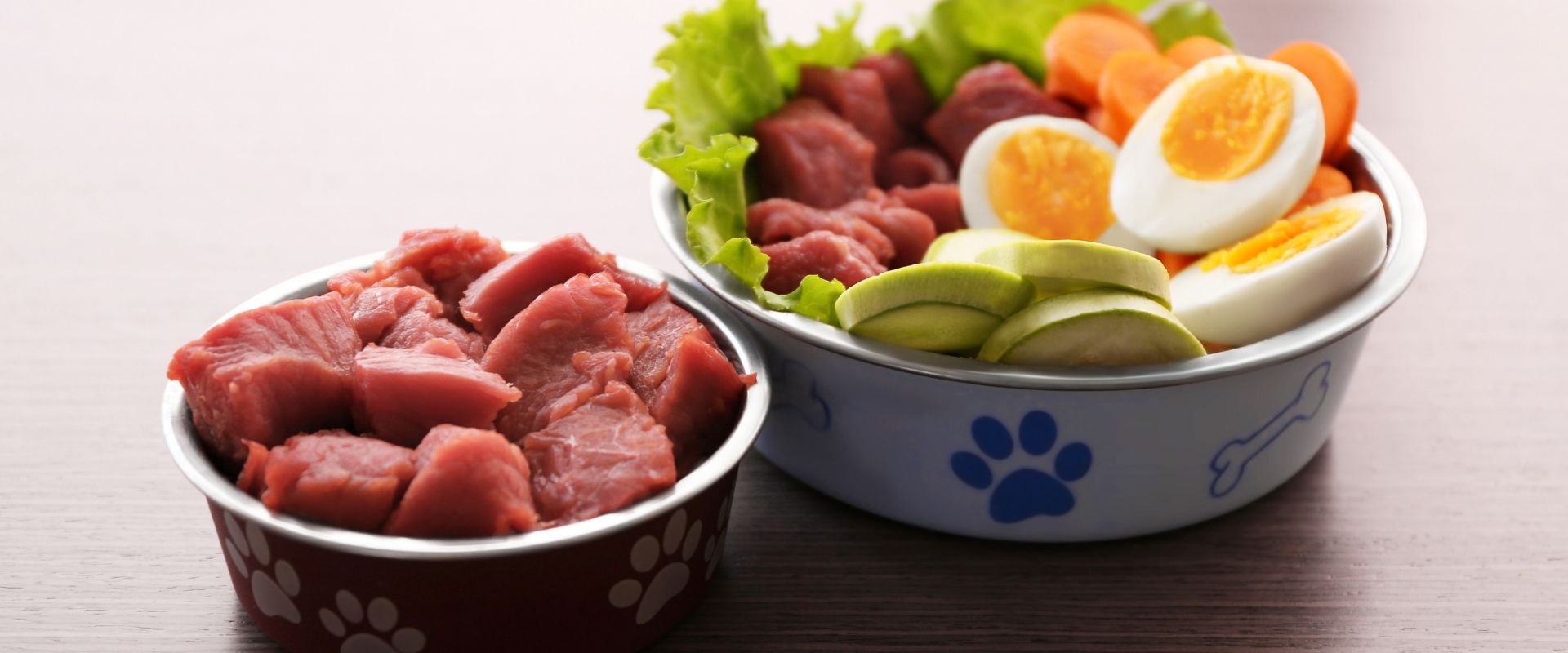
Which would you choose for your pet:
- Real salmon with sweet potato and peas. Or. Salmon flavor.
- Beef, carrots, and oats — ingredients you’d recognize in your own kitchen. Or. Beef-style formula.
- Made with chicken your dog would eat. Or. Chicken-adjacent.
I filled out a survey like this about fifteen years ago. Somehow agreed to it, probably because I had a few idle minutes and a dog who deserved my occasional good intentions.
It started reasonably enough. Then the descriptions got longer. More elaborate. More precious. By the end, the dog food options read like a tasting menu at a restaurant I couldn’t afford. Rosemary crusted beef tenderloin. Exotic grain blends. Things I’d describe as “artisanal” with a straight face.
I did not take this well.
I filled out the additional comments section with the kind of conviction usually reserved for letters to elected officials. The gist: this is dog food. The dog does not care about rosemary. This is manipulation dressed up as care, and I am not fooled.
I concluded, quite satisfied with myself, that the whole enterprise was designed to prey on people who love their pets. Making them feel like anything short of a Michelin-starred bowl was neglect in kibble form.
I was not wrong about the manipulation. I was very wrong about almost everything else.
Here’s the thing about bias. It doesn’t feel like bias from the inside. It feels like common sense.
Mine was simple and total. Food sold in stores was safe. Food was food. The idea that what you ate had meaningful consequences beyond basic sustenance (beyond not starving) struck me as either elitist or paranoid, depending on the day. “Food as medicine” was the kind of thing people said when they wanted to feel superior about their grocery choices. As far as I was concerned, ketchup counted as a vegetable. White flour was fine because it was everywhere. If the FDA approved it, it was nourishing. That was the whole framework, and it was invisible to me as a framework because I’d never had to examine it.
No one had taught me anything different. I had no education around food quality, production methods, how the body actually processes what it’s given, or what it’s specifically asking for at different points in a life. I wasn’t incurious. I simply had no reason to look at the water I was swimming in.
So I didn’t.
And my choices came entirely from my beliefs. Unchallenged, unexamined, confident ones.
If you’ve ever written anything on the internet about nutrition, you’ve met the comments. The ones that show up like clockwork under any article suggesting that food quality might matter.
I ate that my whole life and I’m perfectly fine.
These organic companies are just trying to scare people into paying more for regular food.
My grandparents ate bacon every morning and lived to ninety.
I used to be that commenter, essentially, just in my own head. And I say this not to dismiss those responses, I say it because I understand exactly where they come from. They come from a framework. A set of beliefs, accumulated over a lifetime, that make the incoming information feel threatening rather than useful. When something challenges what you’ve always believed to be true, the instinct isn’t curiosity. It’s defense.
That instinct makes complete sense. It’s also worth looking at directly.
Years passed. I learned things. Became genuinely interested in food, what it does, where it comes from, how it moves through the body. That interest deepened after I became a mother in my forties, when my body was managing more than it ever had and I needed to understand it at a level I’d never bothered with before.
My bias shifted.
And here’s where I want to be honest with you, because this is the part that’s actually useful.
I didn’t shed my bias. I exchanged it for a new one. A better-informed one, I’d argue, but still a lens, still a filter, still a set of convictions I now hold with the same certainty my younger self held hers. I have opinions about processed food. About what the body needs and what it’s been given instead. About what we’ve been told and what’s actually true. Those opinions are strong.
What I’ve had to stay honest about is that conviction, by itself, is not the same as clarity. I can be thoroughly educated and still be selectively seeing. Still reaching for the information that confirms what I already believe. Still occasionally getting a little self-righteous about a grocery cart that isn’t mine.
The bias shifted. The mechanism stayed the same.
So here’s the question worth sitting with, and it’s not about which foods are good for you. That conversation can wait.
The question is: where did your beliefs about food come from?
Not your knowledge. Your beliefs. The ones that run underneath your choices before you’ve consciously made them. The ones that tell you which information to take seriously and which to dismiss. The ones that feel like common sense.
Were they handed to you? Built from habit? Shaped by someone else’s marketing, your family’s kitchen, a doctor’s offhand comment, a decade of dieting culture telling you what a body is supposed to look like and therefore what it’s supposed to eat?
Most of us never got a real education around food.
We got messages. From packaging, from advertising, from whoever raised us and whoever they learned from. We built beliefs from those messages without meaning to. And those beliefs shaped every choice that followed.
That’s not a character flaw. It’s just how it works. The water we swim in becomes so familiar we stop noticing it’s water.
Examining it isn’t about hopping on someone’s bandwagon. It isn’t about feeling guilty for the way you’ve been eating or immediately overhauling your kitchen. It’s just the honest first step toward understanding whether what you currently believe is actually working for you, in this body, in this season.
What’s your version of the dog food survey? The thing that rankled, that you dismissed, that maybe deserves a second look fifteen years later?
That might be exactly where to start.


share
share
share
share